Scholars censure ‘systematic degradation of Iranian healthcare system’ by US-Israeli aggression
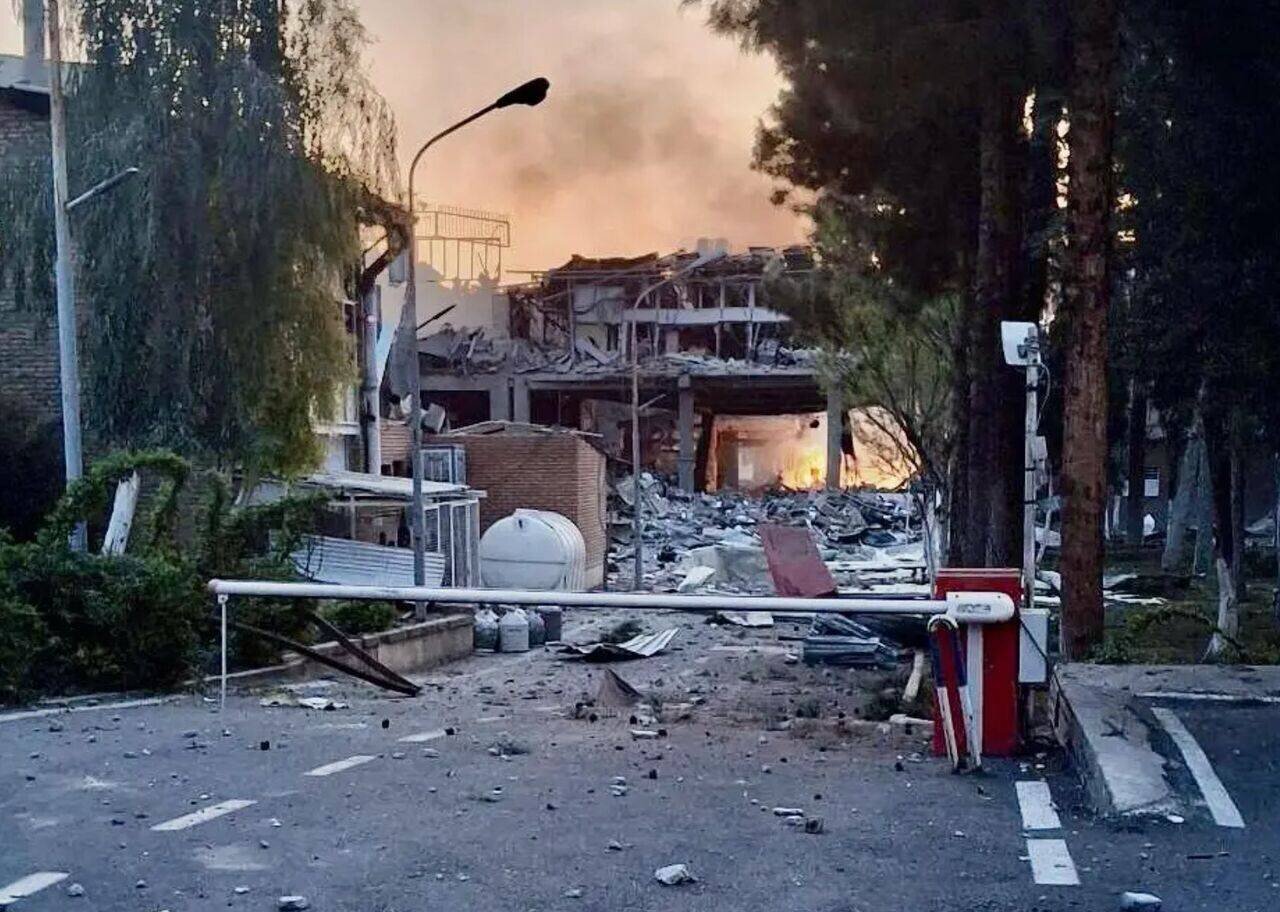
TEHRAN – Four prominent Iranian scholars have severely criticized what they described as ‘the systematic degradation of the Iranian healthcare system’ by military actions carried out by the United States and Israel against the country.
"The military campaign initiated on Feb 28, 2026, by the USA and Israel against Iran has rapidly evolved into a regional conflagration with catastrophic health consequences for Iran as well as for the region,” Iradj Sobhani, Ali Keshavarzian, Asghar Rastegar, and Mohsen Shahmanesh have said in an article in The Lancet - one of the most prestigious peer-reviewed publications among international general medical journals.
The sheer ferocity and duration of the strikes have led to the violation of International Humanitarian Law (IHL) and the foreseeable collapse of civilian life-sustaining systems for Iranian citizens, they added.
Although the immediate human toll is staggering—at least 3636 people, including around 1700 civilians, had been killed as of April 7, 2026—the systematic degradation of the Iranian health-care system, which was already compromised under medical and economic sanctions, represents a profound violation of IHL and a long-term threat to population health.
As of March 27, 2026, data compiled from WHO, the Iranian Red Crescent, and national health agencies reveal a targeted erosion of medical neutrality. A total of 292 medical and relief centres, including hospitals, pharmacies, and primary health clinics, have been damaged or destroyed.
This destruction has forced 13 hospitals completely out of service, while another seven have been fully evacuated under duress because of proximity to danger zones.
The emergency response capacity has been further crippled by the destruction of 48 ambulances and rescue vehicles, as well as an emergency medical helicopter.
The assault on health care is not merely incidental but systemic. Under the Geneva Conventions and the UN Charter, medical personnel and facilities must be protected at all times unless used for military purposes. Yet, verified reports indicate US–Israeli attacks on health facilities and the killing of at least eight health-care workers, doctors, nurses, and emergency first responders in Iran.
These actions disregard the principles of distinction and proportionality, failing to meet the legal thresholds for lawful self-defence. The responsibility of the belligerents is heightened by the lack of preparation for the predictable secondary and tertiary effects of such an extensive conflict.
The consequences extend beyond direct kinetic damage. In Tehran alone, 26,926 civilian units have been destroyed, contributing to a national total of over 87,000 damaged residential and commercial structures.
Power outages and infrastructure collapse have compromised the cold chain for vaccines, raising the imminent risk of outbreaks of preventable diseases such as measles and polio. Over 4000 women and 1600 minors have been injured, and the deaths of over 237 women and over 200 children or teenagers (<18 years) have been reported.
Up to March 24, 2026, eight medicine production factories have been destroyed, primarily in Karaj City, where attacks intensified recently. In Hamadan, a medicine stock was attacked, and in Tehran, the KimiDaroo factory was targeted.
Destruction of the Tofigh Daru industrial complex due to a missile strike occurred at 0630 h on March 31, 2026. Although this specific factory did not produce finished drugs, it manufactured raw materials for hospital medications and various anti-cancer drugs, playing a vital role in the national supply chain.
The Pasteur Institute of Iran—one of the oldest and most prestigious research and public health centres in the Middle East, founded in 1920 following an agreement between the Pasteur Institute in Paris and the Iranian Government—became the target of a strike on April 2, 2026.
Under IHL, the principle of precaution requires parties to minimise civilian suffering. Launching a high-intensity war against a nation of 86 million people—already weakened by decades of sanctions, without viable mechanisms to protect the health of the population is a violation of the duty of care.
The pattern of attacks on health infrastructure and personnel follows the systematic large-scale destruction of health facilities as a weapon of war that was observed in the civil war in Syria and continued in Ukraine, Gaza, and Lebanon, among others.
The initiators of the war must be held accountable for the quiet death imposed on civilians through the deliberate or negligent destruction of the very systems required for human survival.
We, as physicians, think the medical profession should raise their voice against the widespread increase of these destructive attacks against health facilities and personnel.
Peace remains the only viable solution for a region now entering its most dangerous era. We call on all involved parties for an immediate cessation of attacks on health-care facilities and the establishment of independent monitoring mechanisms to ensure accountability for these grave violations of international law.
ISA condemns aggression
The International Sociological Association (ISA) has also issued a statement, strongly condemning military actions carried out by the United States and Israel against Iran.
In accordance with its Statutes and its commitment to the defense of human dignity, academic freedom, and the advancement of sociological knowledge, ISA strongly condemns the escalation of military actions carried out by the United States and Israel in the Middle East, particularly those affecting Iran and Lebanon, the statement reads.
“Ongoing military actions, including attacks on civilian populations and critical infrastructure—such as schools, hospitals, universities, historical monuments, and energy infrastructure—are causing severe human suffering and undermining the conditions necessary for social and academic life.
As highlighted by sociological communities in the region, these events are directly affecting the capacity to teach, research, and sustain institutional life under conditions of extreme uncertainty and risk.
The ISA recalls that the use of force against the sovereignty and territorial integrity of states violates fundamental principles of the Charter of the United Nations and international law.
In this regard, United Nations human rights experts have characterized recent military actions carried out by the United States and Israel as violations of international law and acts of aggression, warning of the risks of impunity for powerful states and the devastating consequences for civilian populations.
Leave a Comment